Watch out for your needs
like you would do for a 5-year-old
because they are as raw and undeniable
as a bleeding wound
If you try to ignore them
and move on,
they will drag you
to despair
and
degradation
According to Tony Robins, all humans have 6 core needs that must be met in order for us to stay healthy and find fulfillment in life:
- Love & Connection
- Certainty
- Uncertainty/Variety
- Significance
- Growth
- Contribution
When our parents sufficiently meet these needs, we grow up feeling worthy of being seen, respected, loved, and appreciated.
On the contrary, if we had experienced a great deal of neglect, abuse, and/or abandonment in childhood, we likely become adults who ignore, dishonor, or repress our core needs the exactly same way our parents did.
The unavoidable outcomes of this are:
- Trauma
- Dissociation
- Low self-esteem
- Reenactment of family dramas
- Disastrous relationships
As psychologist Thais Gibson explains in her courses, our subconscious mind— which governs our beliefs and behaviors— is hardwired to meet our needs, regardless of the consequences.
If we cannot find love, connection, appreciation, and pleasure in constructive ways, i.e., through healthy relationships, our subconscious seeks the quickest and easiest sources of satisfaction.
As a result, we may be plunged into destructive dynamics, without knowing how and why we ended up there in the first place.
Today I want to share with you some examples of how these unmet needs can trap us and provide validated tools to address them without compromising your mental health and dignity.
**Love & Connection** – The need for closeness and intimacy
❌ Destructive Solution:
Hastily entering relationships or unconsciously committing – Barely knowing a partner and already making big decisions, such as:
- Moving in together
- Becoming engaged
- Getting married
- Having kids
💡 Constructive Solution
Become your own best friend and invest in deep connections through mindful decisions, including:
- Fostering self-knowledge through inner work, journaling, and hobbies
- Regularly meeting friends and family members you enjoy
- Making new friends and engaging in meaningful social activities weekly
**Certainty** – The desire to feel secure and safe about the future
❌ Destructive Solution
Clinging to abusive or unfulfilling relationships– Remaining with an incompatible or toxic partner out of fear of loneliness or abandonment.
💡 Constructive Solution
Seek therapy to address:
- Abandonment and rejection wounds
- The wounded inner child
- Dysfunctional relationship patterns
- Low self-esteem
**Uncertainty/Variety** – The yearning for adventure and calculated risks
❌ Destructive Solution
Having an affair – Seeking emotional and sexual gratification outside of your relationship.
Engage in individual or couple therapy to:
- Identify and express your needs to your partner
- Improve your communication skills
- Assess compatibility with your partner
**Significance** – The desire to be seen and recognized
❌ Destructive Solution
Falling victim to romance scams or narcissistic partners like the Tinder swindler—choosing partners based on a craving to feel special and chosen.
💡 Constructive Solution
Seek therapy to treat:
- Abandonment and rejection wounds
- The wounded inner child
- Dysfunctional relationship patterns
- Low self-esteem
**Growth** – The ambition to become a better person and learn more
❌ Destructive Solution
Being opportunistic—dating someone solely for their achievements like money, fame, emotional stability, or success.
💡 Constructive Solution
Invest in self-knowledge and self-development by:
- Identifying and developing your own potential through coaching or therapy
- Volunteering to enhance your empathy for others
- Pursuing education on ethics and interpersonal skills
- Improving your professional and financial life
**Contribution** – The wish to give back and help others
❌ Destructive Solution
Dating extremely immature or dependent partners—playing the savior or caretaker to feel a sense of service.
💡 Constructive Solution
Engage in volunteering and therapy to address:
- Codependency (The imbalance between giving and taking)
- Dysfunctional relationship patterns
- Low self-esteem
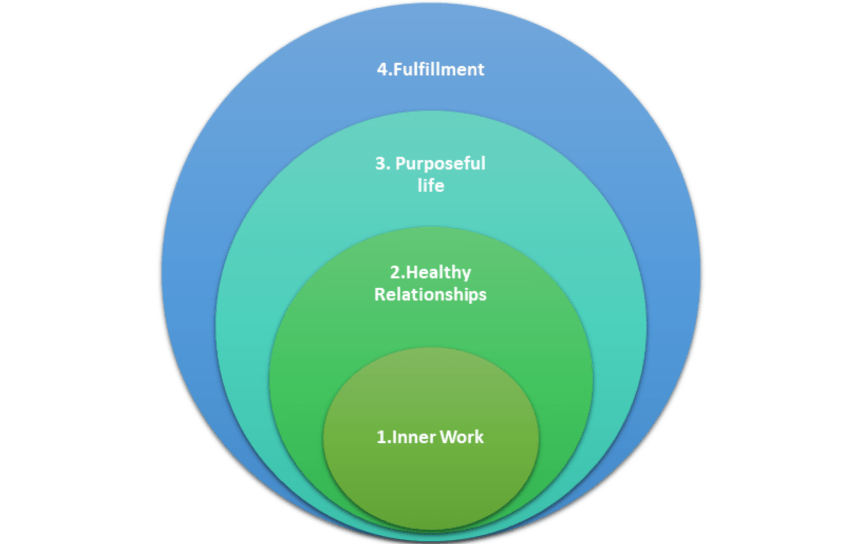
As I mentioned in the post “Building Confidence Beyond Appearance“, there is a roadmap for real success, and it includes:
📌 Inner Work
📌 Healthy relationships (with yourself and others)
📌 Purpose (living on your own terms and pursuing your aspirations)
How you choose to apply this in practice is up to you, as we all have different backgrounds and inclinations.
Helping you with that is one of the reasons why I created this blog (and also to meet my need for contribution 😊).
I hope it is serving its purpose.
✨Inner Compass — Annual Access
A year of weekly reflections focused on emotional maturity, inner coherence, and self-trust.
$120 / year
For those who value inner mastery.
🎁 Related posts:
How Our Emotions and Relationships Can Literally Make Our Body Sick
5 Essential Courses for Self-Development
Why Not Investing in Emotional Healing Make You Poorer
Discover more from Soul & Suitcase
Subscribe to get the latest posts sent to your email.


So right. This dynamic impacts us, and it impacts our children. Better to deal w/ our problems, however painful they may be. Unfortunately, many people are not terribly introspective. Their preference is to “get on w/ things” — ignoring the past. The ripples of past trauma then continue to mar the future.
LikeLiked by 1 person
This avoidant behavior often reveals a lack of inner resources to face reality. And that’s ok.
God’s plans for us are perfect anyway, and we have the eternity to heal and grow.
That’s why when we refuse to move forward voluntarily, our spirit guides us towards expansion through diseases, heartbreaks, or failures.
So, those who are more proactive and resourceful grow through counciousness love, while those who are more reluctant and less mature can only grow through pain.
Two opposite roads leading to the same destination. 😉
LikeLiked by 1 person
Well said. ❤
LikeLike
Thank you for your insightful comments, Anna. I love them! ❤️❤️
LikeLiked by 1 person